
10 Proven Ways to Stop Being a Light Sleeper
Learning how to stop being a light sleeper can transform your energy, mood, and overall health. Waking at every small noise or movement is not just annoying. It is a sign that your body is not reaching the deep, restorative sleep stages it needs to function properly.
As an MBBS doctor, I treat patients with this exact problem regularly. The right combination of targeted strategies consistently produces results, and most people notice a meaningful difference within two to four weeks.
Table of Contents
What Does It Mean to Be a Light Sleeper
A light sleeper wakes easily from external triggers like noise, light, or movement, or internal ones like mild discomfort or stress. While everyone passes through lighter sleep phases during the night, consistently waking during them cuts short the deep stages your body depends on.
The two most critical stages are slow-wave sleep and REM sleep. These are where tissue repair, memory consolidation, hormone release, and immune function all take place. Chronic light sleeping interrupts these stages and the health consequences accumulate quickly.
Why Some People Are Light Sleepers
Understanding the cause makes fixing it far more targeted. The most common reasons include.
- Genetics:Some people are born with a more sensitive nervous system that keeps them closer to wakefulness throughout the night.
- Stress and anxiety:Elevated cortisol keeps the body in a low-level alert state, which actively prevents the transition into deep sleep.
- Poor sleep environment:Noise, excess light, temperature changes, and uncomfortable bedding are among the most common and most fixable causes.
- Medical conditions:Sleep apnea, restless leg syndrome, and chronic pain can fragment sleep significantly and are often undiagnosed.
- Aging:Sleep architecture changes with age. Older adults naturally spend less time in deep sleep and become more sensitive to disruption.
Signs You Are a Light Sleeper
If any of the following apply to you consistently, light sleeping is likely affecting your overall health.
- You wake easily from noise, movement, or changes in light.
- You feel tired or unrefreshed even after seven to eight hours in bed.
- You struggle to fall back asleep once you wake during the night.
- You frequently remember vivid dreams, which indicates time spent in lighter sleep stages.
- You rely on daytime naps to compensate for poor nighttime sleep.
How Light Sleep Affects Your Health
Light sleeping is not just an inconvenience. The health impact is well documented.
- Daytime fatigue:Interrupted sleep reduces energy levels and concentration, which affects performance at work and in daily life.
- Mood changes:Poor sleep quality is directly linked to increased irritability, anxiety, and symptoms of depression.
- Weakened immunity:Deep sleep is when your immune system is most active. Without enough of it, your body becomes more vulnerable to illness.
- Reduced cognitive performance:Memory, decision-making, and problem-solving all deteriorate when deep sleep is consistently cut short.
10 Proven Ways to Stop Being a Light Sleeper
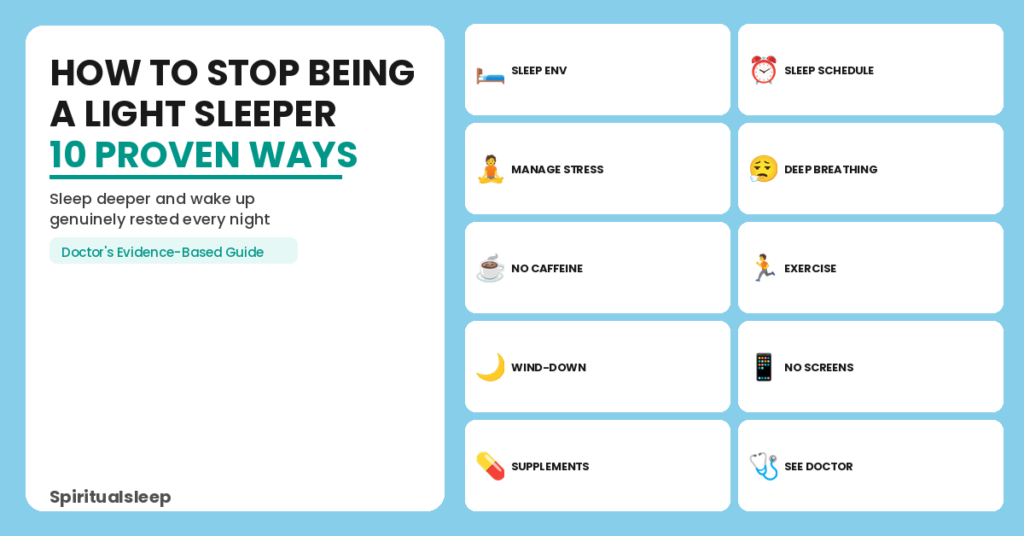
1. Optimize Your Sleep Environment
Your bedroom environment is the most direct and controllable factor in sleep depth. Small changes here produce fast results.
- Block out noise:Use earplugs, a white noise machine, or a fan to mask disruptive sounds consistently through the night.
- Control light:Install blackout curtains and remove any devices that emit light. Even small LED indicators can disrupt sleep cycles.
- Regulate temperature:Keep your room between 16 and 19 degrees Celsius. A cooler room signals your body to drop its core temperature, which triggers deeper sleep.
- Invest in quality bedding:An uncomfortable mattress or pillow is a constant low-level irritant that keeps your brain from fully switching off.
2. Keep a Consistent Sleep Schedule
Going to bed and waking at the same time every day trains your circadian rhythm to expect sleep at a specific time. This makes falling into deep sleep faster and more reliable.
This applies on weekends too. Sleeping in on Saturday disrupts the rhythm built through the week and makes Monday mornings harder than they need to be.
3. Manage Stress and Anxiety Before Bed
High cortisol is one of the most common causes of light sleeping and one of the most treatable. These techniques lower cortisol reliably within minutes.
- Mindfulness meditation:Even five to ten minutes of quiet, focused breathing before bed reduces nighttime cortisol levels measurably.
- Progressive muscle relaxation:Tense and fully release each muscle group from feet to face. This discharges physical tension that keeps the nervous system alert.
- Journaling:Writing down worries or tomorrow’s tasks clears the mental loop that keeps many people in shallow sleep. One of my patients, a teacher, reduced her nighttime awakenings significantly with just a 10-minute journaling routine before bed.
Stress-driven sleep problems often overlap with insomnia. Understanding what causes insomniacan help identify whether that is a factor.
4. Practice Deep Breathing Techniques
Controlled breathing activates the parasympathetic nervous system, which is the body’s rest-and-digest mode. These three methods work well before sleep.
- 4-7-8 breathing:Inhale for 4 counts, hold for 7, exhale for 8. The extended exhale is the key driver of the relaxation response.
- Diaphragmatic breathing:Breathe into the belly rather than the chest. Place one hand on your abdomen to confirm the belly rises on each inhale.
- Alternate nostril breathing:Close one nostril and inhale through the other, then switch. This technique balances the nervous system and reduces pre-sleep anxiety effectively.
5. Avoid Caffeine and Alcohol
Caffeine stays in your system for six to eight hours and directly suppresses deep sleep stages even when you do not feel its stimulant effect. Cut off caffeine intake after midday including tea, chocolate, and some medications.
Alcohol is equally disruptive. It may cause drowsiness initially but it fragments sleep in the second half of the night and almost completely suppresses REM sleep.
6. Exercise Regularly During the Day
Moderate daily exercise is one of the most reliable ways to increase deep sleep. Walking, swimming, cycling, or yoga all reduce cortisol, regulate the circadian rhythm, and increase the time your body spends in slow-wave sleep.
Avoid vigorous exercise within two hours of bedtime as it raises core body temperature and delays sleep onset. Regular physical activity is one of the most effective natural sleep aids available.
7. Build a Wind-Down Routine
Your brain needs a transition period between the activity of the day and sleep. A consistent 30-minute routine before bed signals your nervous system that rest is coming.
- Taking a warm bath or shower lowers your core body temperature after you get out, which triggers the sleep response naturally.
- Reading a physical book (not a screen) calms the mind without stimulating it.
- Listening to quiet music or nature sounds reduces the mental activity that keeps light sleepers in shallow stages.
8. Cut Screen Time One Hour Before Bed
Blue light from phones, tablets, and computers suppresses melatonin production directly. Without adequate melatonin, your brain cannot transition into deep sleep on schedule.
Switch off screens at least one hour before bed. If this is not possible, use a blue light filter on your device and reduce screen brightness significantly in the evening.
9. Try Natural Sleep Supplements
If lifestyle changes alone are not producing results, magnesium glycinate and low-dose melatonin are the two most evidence-supported natural options for improving sleep depth.
Always consult a doctor before starting any supplement to confirm, it is appropriate for your situation and will not interact with any existing medication.
10. Rule Out an Underlying Medical Condition
If you have applied all of the above consistently for several weeks and still wake frequently, see a doctor. Sleep apnea, restless leg syndrome, and chronic pain are all common causes of light sleeping that require specific treatment. Early diagnosis makes a significant difference to outcomes.
A Doctor’s Personal Experience
In my practice, I treated a software engineer in his early 30s who woke at every small noise due to chronic work-related stress. He had tried earplugs and melatonin without lasting results. After reviewing his routine, it became clear that his cortisol was staying elevated well into the evening.
We worked on three things together: a consistent 11pm bedtime, a 15-minute journaling and 4-7-8 breathing routine before sleep, and blackout curtains in his bedroom. Within four weeks he was sleeping through the night consistently for the first time in two years.
On a personal note, I follow a fixed bedtime and a short deep breathing routine after late clinic days. These two habits alone have made a reliable difference to my own sleep depth and morning energy.
Frequently Asked Questions
Can light sleepers become deep sleepers?
Yes. With consistent behavioral changes and environmental adjustments, most light sleepers achieve meaningfully deeper sleep within two to four weeks. It takes patience but the improvement is sustainable.
How long does it take to see results?
Most people notice changes within two to four weeks of implementing these strategies consistently. Doing two or three changes at once produces faster results than trying all ten simultaneously.
Are white noise machines effective?
Yes. White noise masks the acoustic contrast between silence and sudden sounds, which is the main trigger for light sleepers waking. Even a basic fan achieves a similar effect.
Is it safe to use earplugs every night?
Yes, provided they fit comfortably and are kept clean. Replace foam earplugs regularly and clean reusable ones to prevent ear infections.
Conclusion
Knowing how to stop being a light sleeper is the first step. The solution combines environment, routine, stress management, and in some cases medical attention. No single change fixes the problem alone, but two or three implemented consistently produce real results within weeks.
Start with your sleep environment and bedtime routine tonight. These are the fastest changes to implement and often produce the most noticeable results.
If problems persist after consistent effort, speak with a healthcare professional to rule out an underlying cause.
Medical Disclaimer:This article is based on thorough research, scientific studies, and my personal experience as a medical doctor interested in sleep health. This content is for informational purposes only and should not be considered medical advice. Each individual’s sleep needs and health conditions are unique. I recommend consulting with a healthcare professional or sleep specialist to address specific concerns.