5 Deep Breathing Relaxation Exercises for Sleep
Deep breathing relaxation exercises for sleep are one of the most underused yet most effective tools for anyone who struggles to fall asleep or stay asleep at night. They are free, require no equipment, and can be done in bed within minutes.
The science is clear. Controlled breathing activates your parasympathetic nervous system, lowers stress hormones, and slows your heart rate, creating the exact physiological conditions your body needs to enter sleep. As an MBBS doctor, I recommend these techniques to patients daily and practice them myself.
Table of Contents
Why Sleep Problems Are More Common Than You Think
Millions of adults cannot fall asleep even when they are physically exhausted. The problem is not tiredness. It is an overactive nervous system that stays stuck in alert mode long after the day is over. If sleep apnea is contributing to your sleep problems, these techniques are also covered in our guide to breathing exercises for sleep apnea.
Stress, screen exposure, and overstimulation keep cortisol elevated at night when it should be dropping. Your body cannot switch into rest mode on demand without an active trigger. Deep breathing provides exactly that trigger.
How Stress Physically Blocks Sleep
When you are stressed, your body produces cortisol and adrenaline. These hormones raise your heart rate, tighten your muscles, and sharpen your alertness. All of this is the opposite of what sleep requires.
The longer you lie awake trying to force sleep, the more frustrated you become, which raises cortisol further. It becomes a cycle. Breaking that cycle requires a physiological intervention, not just willpower. That is where controlled breathing comes in.
What Are Deep Breathing Relaxation Exercises?
Deep breathing exercises are intentional, slow, and controlled breathing patterns designed to calm the nervous system. They shift your body from sympathetic mode (fight-or-flight) to parasympathetic mode (rest-and-digest).
By focusing on your breath, you redirect attention away from racing thoughts. The result is a genuine physiological shift in your body, not just a mental distraction.
Why Deep Breathing Works for Sleep
Lowers Cortisol Levels
Slow, controlled breathing directly reduces cortisol, the hormone that keeps your brain wired and alert at night. As cortisol drops, your body receives the chemical signal that it is safe to relax.
Slows Heart Rate
A slower heart rate is one of the key physiological markers of sleep onset. Deep breathing achieves this in minutes by stimulating the vagus nerve, which runs from your brainstem down through your chest and abdomen.
Activates the Vagus Nerve
The vagus nerve controls the shift from stress response to relaxation response. Stimulating it through deep exhalations is one of the fastest ways to calm the nervous system. The longer your exhale compared to your inhale, the stronger this effect.
Improves Oxygenation
Shallow breathing, which most stressed people default to, reduces oxygen delivery to the brain. Deep breathing corrects this, improves brain function, and reduces the mental restlessness that keeps people awake.
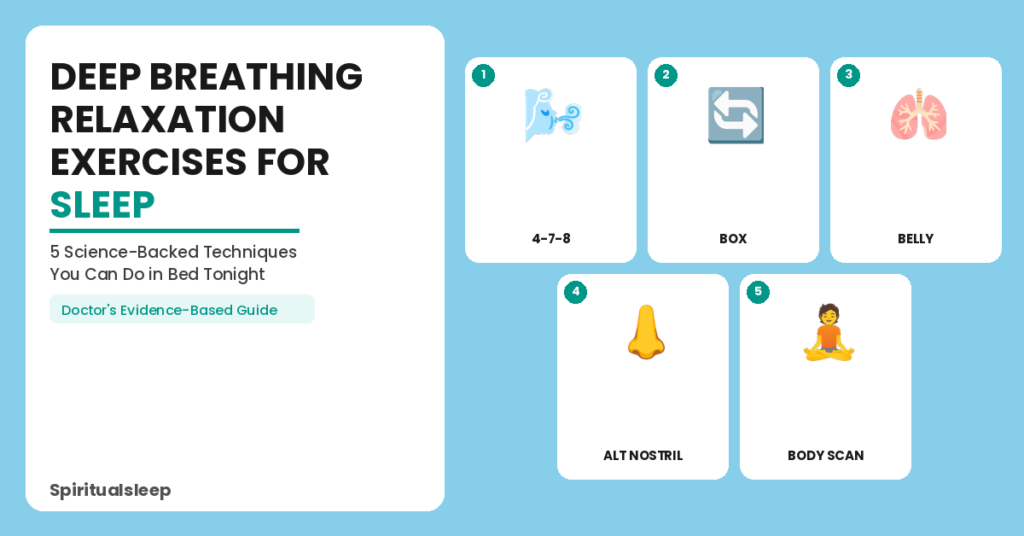
5 Deep Breathing Relaxation Techniques for Better Sleep
1. The 4-7-8 Breathing Technique
This is one of the most well-researched breathing techniques for sleep. It works by extending the exhale to activate the parasympathetic response.
How to do it:Inhale through your nose for 4 counts. Hold for 7 counts. Exhale slowly through your mouth for 8 counts. Repeat 4 to 5 cycles.
2. Box Breathing (Square Breathing)
Box breathing is used by military personnel and surgeons to manage acute stress. It creates a balanced, rhythmic breathing pattern that quiets mental noise quickly.
How to do it:Inhale for 4 counts. Hold for 4 counts. Exhale for 4 counts. Hold for 4 counts. Repeat for 3 to 5 minutes.
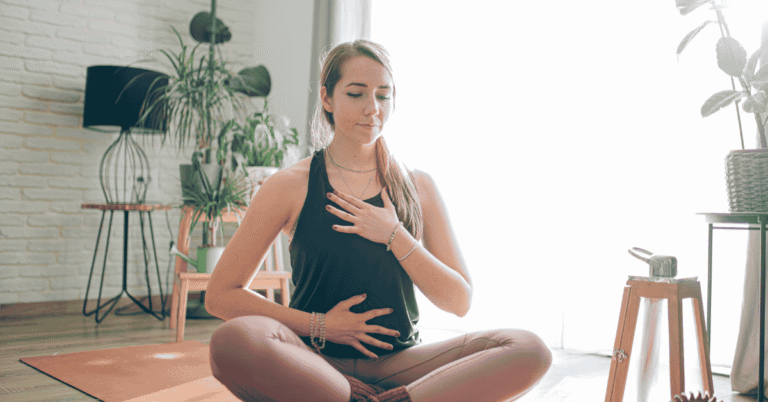
3. Diaphragmatic Breathing (Belly Breathing)
Diaphragmatic breathing uses the full capacity of the lungs and engages the diaphragm, maximizing oxygen intake and relaxation. Most people breathe shallowly from the chest without realizing it.
How to do it:Place one hand on your chest and one on your belly. Inhale through your nose so that your belly rises and your chest stays still. Exhale slowly and let your belly fall. Repeat for 5 to 10 minutes.
4. Alternate Nostril Breathing (Nadi Shodhana)
This ancient yogic technique balances the left and right hemispheres of the brain, reduces anxiety, and promotes a calm mental state before sleep.
How to do it:Close your right nostril with your thumb and inhale through your left. Close the left with your ring finger and exhale through the right. Inhale through the right, then switch and exhale through the left. Repeat for 3 to 5 minutes.
5. Progressive Breathing with Body Scan
This combines deep breathing with a full-body tension release. It works from the feet upward, systematically relaxing each muscle group as you breathe.
How to do it:Lie down in a quiet room. Take a deep breath and focus on your toes. As you exhale, imagine tension melting away from that area. Move upward through your legs, abdomen, chest, shoulders, and face until your whole body feels heavy and relaxed.
Signs You Will Benefit From These Exercises
These techniques work best if you recognize any of the following patterns.
- You experience racing thoughts the moment you get into bed.
- You feel physical tension in your neck, shoulders, or jaw at night.
- You wake up multiple times and struggle to fall back asleep.
- You find it hard to mentally disconnect from work or screens before bed.
- You rely on sleep aids but want a natural, sustainable alternative.
A Doctor’s Personal Experience
In my practice, I had a patient, a stressed entrepreneur in his late 30s, who came to me exhausted but unable to sleep despite trying melatonin supplements and multiple sleep apps. He was sceptical when I suggested breathing exercises, calling the idea too simple.
I asked him to commit to the 4-7-8 technique for two weeks, five minutes each night before sleep. Within 10 days, he reported falling asleep faster and feeling significantly more rested in the mornings.
I personally use diaphragmatic breathing after long clinic days. After seeing patients for eight to ten hours, it is the one practice that reliably helps me unwind and prepare for sleep within minutes.
How to Build a Deep Breathing Habit
Building consistency matters more than perfection. Here is how to make this stick.
- Set a fixed time:Practice immediately after getting into bed, at the same time every night. Linking it to an existing habit builds the routine faster.
- Create the right environment:Dim the lights, put your phone face down, and keep the room cool. This primes your brain for sleep before you even begin breathing.
- Start with just 5 minutes:Do not aim for a 20-minute session on night one. Five minutes done consistently beats 20 minutes done occasionally.
- Use guided support if needed:Apps like Calm or Headspace offer structured breathing sessions designed specifically for sleep that work well for beginners.
Common Mistakes to Avoid
- Rushing through the exercise:Deep breathing requires slow, deliberate pacing. Speeding up defeats the purpose entirely.
- Breathing from the chest:Always breathe into the belly, not the chest. Chest breathing keeps the body in a shallow, stressed state.
- Giving up after one session:Benefits build over days, not minutes. Most people notice meaningful changes after five to seven consistent nights.
- Expecting it to replace medical treatment:If you have clinical insomnia or a diagnosed sleep disorder, use these techniques alongside professional guidance, not instead of it.
Frequently Asked Questions
Can deep breathing cure insomnia?
Deep breathing is not a cure for chronic insomnia but it is one of the most effective tools for managing the stress and hyperarousal that drive it. It works best as part of a broader sleep hygiene routine.
How long should I practice before bed?
Start with 5 minutes and increase to 10 once it becomes a habit. Even short sessions produce measurable physiological changes.
Is it safe for children?
Yes. Simple techniques like belly breathing are safe and effective for children. They can help kids relax and fall asleep more easily at bedtime.
What if I feel lightheaded?
Lightheadedness usually means you are breathing too deeply or too quickly. Slow down, take more natural breaths, and let your body adjust gradually.
Conclusion
Combining breathing exercises with the right foods before bed produces faster results for most people. Deep breathing relaxation exercises for sleep are one of the simplest and most evidence-backed tools available for anyone struggling with poor sleep. The five techniques covered here work through different mechanisms but all achieve the same outcome: a calmer nervous system, a slower heart rate, and a body that is ready for rest.
Start with one technique tonight. Practice it for seven consecutive nights before adding another. Consistency is what makes the difference between a technique that helps once and one that transforms your sleep permanently.
If sleep difficulties continue despite regular practice, consult a healthcare professional to rule out underlying conditions.
Medical Disclaimer:This article is based on thorough research, scientific studies, and my personal experience as a medical doctor interested in sleep health. This content is for informational purposes only and should not be considered medical advice. Each individual’s sleep needs and health conditions are unique. I recommend consulting with a healthcare professional or sleep specialist to address specific concerns.