
7 Foods to Avoid for Better Sleep: A Doctor’s Guide
Knowing which foods to avoid for better sleep can be just as valuable as knowing which foods to eat. Most people focus on sleep-promoting foods but consistently overlook the dietary habits that are quietly keeping them awake every night.
As an MBBS doctor with a focus on sleep health, I see patients regularly whose insomnia has a direct dietary driver. The right food changes alone have produced significant improvements in sleep quality within one to two weeks for many of them. If you want to know which foods actively promote sleep alongside cutting the disruptive ones, see our guide to the best foods before bed. This guide covers exactly what to cut and why.
Table of Contents
How Food Directly Affects Your Sleep
What you eat influences your body’s ability to fall and stay asleep through several distinct mechanisms. Certain foods spike cortisol, disrupt melatonin production, cause physical discomfort, or overstimulate the nervous system at exactly the time it needs to wind down.
Diet and sleep are bidirectionally linked, meaning poor sleep also drives poor food choices the next day. Breaking the cycle starts with what you put on your plate in the hours before bed.
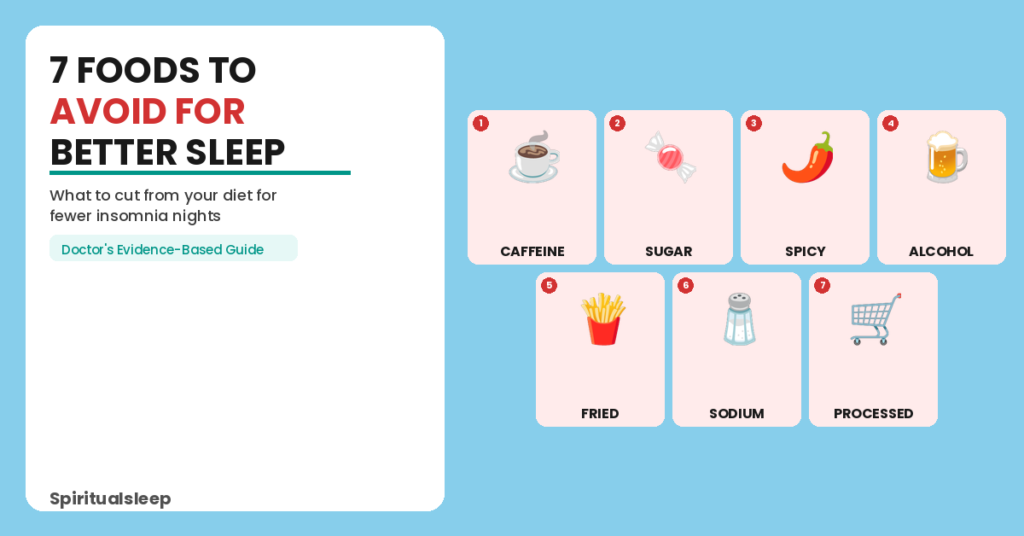
7 Foods to Avoid for Better Sleep
1. Caffeine
Caffeine is the most widely consumed sleep disruptor in the world. It works by blocking adenosine, the chemical that builds up throughout the day to create sleep pressure. When you block adenosine, your brain stays alert even when your body is exhausted.
Caffeine has a half-life of five to seven hours, meaning a 3pm coffee still has half its stimulant effect active at 9pm. It is also found in black and green tea, chocolate, energy drinks, cola, and some over-the-counter pain medications.
- Cut caffeine after midday:This single change resolves a significant percentage of sleep-onset problems in regular coffee drinkers.
- Switch to herbal alternatives:Chamomile, peppermint, or rooibos tea in the afternoon and evening provide a calming ritual without stimulant effect.
- Check labels carefully:Sodas, pre-workout supplements, and some headache medications contain significant hidden caffeine.
2. Sugary Snacks and Desserts
High-sugar foods cause a rapid blood glucose spike followed by a crash. This crash can trigger a stress response in the middle of the night, causing the body to release adrenaline and cortisol to stabilize blood sugar. The result is a middle-of-the-night awakening that feels random but has a clear dietary cause.
Evening sugar consumption also suppresses melatonin production and disrupts the hormonal balance your body needs for deep sleep.
- Replace sugary snacks with low-glycaemic alternatives:A banana, a handful of almonds, or plain Greek yogurt stabilize rather than spike blood sugar.
- Avoid processed sweets after 7pm:Cookies, cakes, and chocolate bars set up the blood sugar roller coaster that disrupts sleep hours later.
- Balance meals throughout the day:Consistent, balanced nutrition reduces sugar cravings at night.
3. Spicy and Acidic Foods
Spicy foods raise core body temperature, which delays sleep onset because the body needs to cool down to initiate deep sleep. They also trigger heartburn and acid reflux, both of which worsen significantly in a horizontal sleeping position.
Acid reflux is one of the most underrecognized causes of nighttime waking, with many patients attributing broken sleep to stress rather than what they ate for dinner.
- Avoid spicy meals within three hours of bed:Hot curries, chilli, and heavily spiced dishes are best reserved for lunch.
- Reduce acidic foods at dinner:Tomato-based sauces, citrus dressings, and pickled foods increase reflux risk close to bedtime.
- Elevate the head of your bed slightly:If reflux is frequent, a small incline prevents stomach acid from traveling upward during sleep.
4. Alcohol
Alcohol is one of the most counterproductive sleep aids available. It induces initial drowsiness, which leads many people to believe it helps them sleep. In reality, alcohol fragments sleep severely in the second half of the night and suppresses REM sleep almost completely.
REM sleep is where emotional processing, memory consolidation, and hormonal regulation all take place. Regular alcohol consumption before bed degrades sleep quality progressively, even when total sleep duration appears normal.
- Stop using alcohol as a sleep aid:It produces worsening sleep quality with regular use, not improvement.
- Limit to one drink and finish at least three hours before bed:This reduces the impact on sleep architecture significantly.
- Replace the evening wind-down drink:Warm chamomile tea or magnesium-rich warm milk achieve relaxation without disrupting REM sleep.
5. Fried and Fatty Foods
High-fat meals take significantly longer to digest, keeping the digestive system active well into the night. This raises core body temperature, causes physical discomfort, and prevents the complete physical relaxation needed for deep sleep.
- Choose lighter dinners:Lean protein, vegetables, and whole grains digest efficiently and support rather than obstruct sleep.
- Avoid fast food after 7pm:Chips, fried chicken, and burgers take three to four hours to digest fully.
- Eat your largest meal at lunch:This aligns with your digestive system’s peak activity window and leaves the evening free for lighter nutrition.
6. Processed Foods and Artificial Additives
Processed foods often contain artificial preservatives, flavor enhancers like MSG, artificial colors, and high levels of refined sugar, all of which can overstimulate the nervous system. Many processed foods also contain hidden caffeine or tyramine, an amino acid that triggers noradrenaline release.
- Switch to whole, unprocessed foods at dinner:Fresh vegetables, whole grains, and unprocessed proteins contain none of the additives that disrupt the nervous system.
- Read ingredient labels:If a food has more than five to six ingredients or contains unrecognizable names, it belongs in the morning not the evening.
- Cook at home where possible:Home-prepared meals give you complete control over what goes into your food.
7. High-Sodium Foods
Excessive sodium causes the body to retain water and triggers thirst, both of which lead to nighttime awakenings. High sodium intake also raises blood pressure, which activates the sympathetic nervous system and makes deep sleep harder to achieve.
- Replace salty evening snacks:Raw vegetables, unsalted nuts, or plain yogurt satisfy the snacking urge without sodium disruption.
- Use herbs and spices instead of salt:Garlic, turmeric, ginger, and fresh herbs add flavor without sleep-disrupting sodium.
- Hydrate consistently through the day:Drinking adequate water during the day reduces the nighttime thirst that sodium triggers.
If you have sleep apnea, dietary changes are particularly important as a complementary treatment.
Meal Timing Matters as Much as Food Choices
Even sleep-friendly foods can disrupt sleep when eaten too close to bedtime. Digestion generates metabolic heat and keeps core body temperature elevated, which delays sleep onset.
- Finish your last main meal at least two to three hours before bed:This gives your digestive system time to complete most of its work before you lie down.
- Keep evening snacks light:A small portion of banana, almonds, or plain yogurt supports melatonin production rather than disrupting it.
- Avoid eating anything within 30 minutes of sleep:Even small late snacks raise body temperature slightly and trigger a small digestive response.
A Doctor’s Personal Experience
In my practice, I worked with a patient in her early 30s who had struggled with broken sleep and early-morning waking for over a year. After reviewing her habits, two dietary patterns stood out: a large coffee at 4pm every afternoon and a habit of eating sugary snacks while watching television at night.
Removing the afternoon coffee and replacing the evening snacks with chamomile tea and almonds produced noticeable improvements within ten days. She described it as the first meaningful sleep change she had experienced after months of trying other approaches.
Personally, I keep my last coffee before noon and avoid heavy or spicy dinners on clinic days. These two habits have a more consistent impact on my sleep quality than any supplement I have tried.
Frequently Asked Questions
Can changing my diet alone cure insomnia?
For insomnia with a clear dietary driver, yes. For chronic insomnia with stress or medical causes, dietary changes are an important part of a broader approach but rarely sufficient on their own.
How quickly do dietary changes affect sleep?
Most people notice meaningful improvements within one to two weeks of consistent changes. The fastest results typically come from cutting afternoon caffeine.
Do I need to eliminate caffeine completely?
No. Keeping caffeine consumption to the morning hours, before noon if possible, preserves the sleep benefits while allowing you to enjoy it. Timing matters more than total elimination.
Are there foods that actively improve sleep?
Yes. Tart cherries, kiwi, almonds, chamomile tea, and oatmeal all contain nutrients that support melatonin production and muscle relaxation naturally.
Conclusion
Knowing the foods to avoid for better sleep gives you immediate, actionable changes to make tonight. Caffeine, sugar, alcohol, spicy food, fatty meals, processed additives, and excess sodium all disrupt sleep through distinct but well-understood mechanisms.
Start with the two changes most relevant to your current habits. For most people, cutting afternoon caffeine and removing evening sugar produces the fastest improvement. Build from there over two to three weeks.
If dietary changes do not produce improvement within a month, consult a healthcare professional to identify other contributing factors.
Medical Disclaimer:This article is based on thorough research, scientific studies, and my personal experience as a medical doctor interested in sleep health. This content is for informational purposes only and should not be considered medical advice. Each individual’s sleep needs and health conditions are unique. I recommend consulting with a healthcare professional or sleep specialist to address specific concerns.