
Dietary Changes to Improve Sleep Apnea: A Doctor’s Complete Guide
Dietary changes to improve sleep apnea are one of the most underutilized tools available to patients managing this condition. Most people focus entirely on CPAP therapy or surgery without realizing that specific food choices directly influence the key drivers of sleep apnea including excess weight, airway inflammation, and muscle tone.
As an MBBS doctor with a focus on sleep disorders, I integrate dietary guidance into every sleep apnea treatment plan I build. The results are consistently better when diet is addressed alongside medical treatment. This guide covers exactly what to eat, what to avoid, and how to structure your meals for meaningful improvement.
Table of Contents
How Diet Directly Affects Sleep Apnea
Diet is just one part of a complete sleep apnea management plan. Diet influences sleep apnea through three distinct pathways. First, excess body weight, driven largely by dietary habits, is the single most modifiable risk factor for obstructive sleep apnea. Second, chronic dietary inflammation narrows and irritates airways making collapse more likely during sleep. Third, specific nutrients directly support the muscle tone and neurological function that keep the airway open.
Dietary patterns that reduce obesity and systemic inflammation have been shown in multiple studies to reduce apnea-hypopnea index scores, the clinical measure of sleep apnea severity, independently of other treatments.
Weight Management Through Diet
Best Foods for Weight Loss with Sleep Apnea
Obesity, particularly central and upper body fat, physically compresses the airway during sleep. Even a 10 percent reduction in body weight reduces apnea severity by 30 to 50 percent in most patients. Diet is the primary lever for achieving and sustaining that weight change.
- High-fiber vegetables and legumes:These provide bulk and satiety without high caloric density. Broccoli, spinach, chickpeas, and lentils all support steady blood sugar and reduce overeating.
- Lean proteins:Chicken breast, fish, eggs, and tofu preserve and build muscle mass during weight loss while keeping you fuller for longer between meals.
- Healthy fats in moderation:Avocado, nuts, seeds, and olive oil provide essential fatty acids and fat-soluble vitamins while supporting hormonal balance.
Eating Habits That Support Weight Loss
Food choices matter but eating patterns amplify or undermine them. Three habits consistently produce better weight outcomes.
- Eat your largest meal at midday:Metabolic rate peaks in the late morning and early afternoon. Consuming the majority of calories then rather than at dinner supports better energy use.
- Stop eating at least two hours before bed:Late-night eating raises core body temperature, worsens acid reflux, and stores calories more readily as fat.
- Reduce portion size at dinner:A lighter evening meal reduces digestive activity during sleep, lowering core body temperature and allowing deeper sleep stages to form.
Anti-Inflammatory Foods That Reduce Airway Irritation
Anti-inflammatory eating patterns consistently reduce both the frequency and severity of apnea events by reducing baseline airway irritation. The most effective options include.
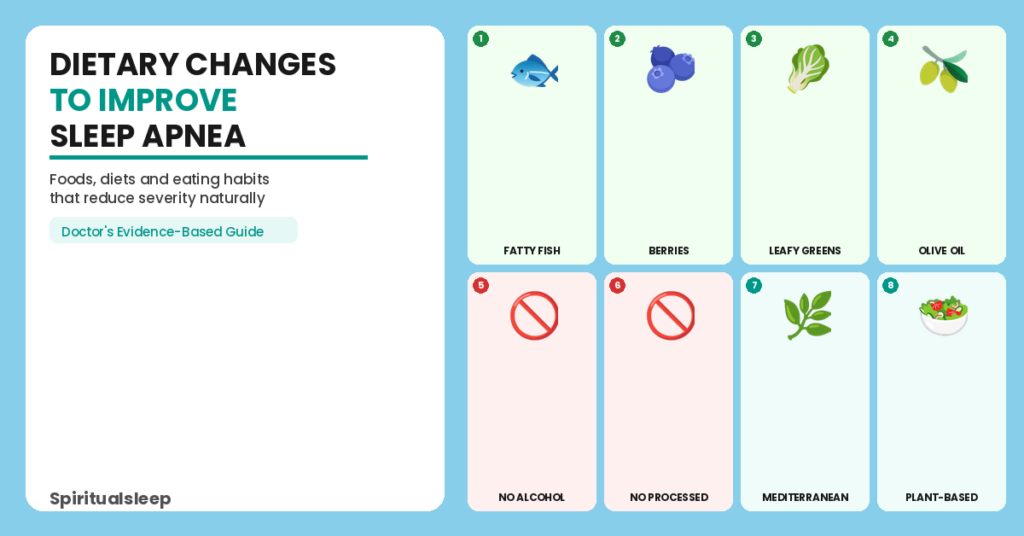
- Fatty fish:Salmon, mackerel, sardines, and herring are rich in omega-3 fatty acids which directly reduce inflammatory cytokines. Aim for two to three servings per week.
- Berries:Blueberries, strawberries, raspberries, and cherries are dense in anthocyanins and polyphenols that reduce oxidative stress and systemic inflammation.
- Leafy greens:Spinach, kale, Swiss chard, and rocket contain magnesium, vitamin K, and folate, all of which support vascular health and reduce airway inflammation.
- Turmeric:Curcumin, the active compound in turmeric, is among the most potent anti-inflammatory nutrients available in food. Add to soups, curries, or warm milk daily.
- Olive oil:Extra virgin olive oil contains oleocanthal, which has anti-inflammatory properties comparable to low-dose ibuprofen when consumed regularly.
Foods to Avoid with Sleep Apnea
Foods That Worsen Airway Obstruction
- Alcohol:Alcohol relaxes pharyngeal muscles more deeply than normal sleep does, converting mild apnea into moderate apnea. Finish any alcohol at least three hours before bed.
- Processed and ultra-processed foods:High in refined sugars, seed oils, and artificial additives, these foods drive systemic inflammation and weight gain simultaneously.
- Dairy close to bedtime:For some patients, dairy products increase mucus production in the nasal passages and throat. Trial non-dairy alternatives in the evening if you notice worsening congestion.
- Refined carbohydrates:White bread, pasta, pastries, and sugary drinks cause rapid blood glucose spikes that promote fat storage, particularly in the neck and abdomen most relevant to OSA.
Many of these same foods are also linked to general sleep disruption beyond sleep apnea.
Best Dietary Patterns for Sleep Apnea
Mediterranean Diet
The Mediterranean diet has been linked to reduced sleep apnea severity through its combined effects on weight, inflammation, cardiovascular health, and blood sugar regulation.
Core components include olive oil as the primary fat, abundant vegetables and legumes, moderate amounts of fish and poultry, whole grains, nuts, and minimal processed food or red meat. This pattern is practical, affordable, and sustainable long-term.
Low-Carbohydrate Diet
Reducing refined carbohydrate intake promotes weight loss, stabilizes blood sugar, and reduces the insulin-driven fat accumulation that worsens obstructive sleep apnea. A low-carbohydrate approach achieves faster initial weight loss than a standard calorie-restricted diet for most people.
Focus on removing white bread, pasta, pastries, sugary drinks, and packaged snacks rather than eliminating all carbohydrates. Vegetables, legumes, and whole grains are carbohydrate sources that support rather than worsen sleep apnea.
Plant-Based Diet
A whole-food plant-based diet reduces systemic inflammation, supports healthy weight, and provides fiber that feeds beneficial gut bacteria linked to better sleep quality. Replacing animal products with legumes, whole grains, vegetables, and fruits addresses multiple sleep apnea risk factors simultaneously. Even a predominantly plant-based evening meal pattern with moderate animal protein at other times produces measurable improvements.
Hydration and Meal Timing
- Drink consistently through the day:Dehydration thickens mucus secretions in the airway and worsens nasal congestion. Aim for six to eight glasses of water spread evenly through waking hours.
- Reduce fluids after 7pm:Excessive evening fluid intake increases nighttime bathroom trips which disrupt already-fragmented sleep further.
- Include hydrating foods:Cucumber, watermelon, celery, and courgette all contribute to daily hydration while providing anti-inflammatory nutrients.
A Doctor’s Personal Experience
In my practice, I treated a 45-year-old patient with severe obstructive sleep apnea and a BMI of 34. He was using CPAP therapy but his daytime fatigue remained significant and he was reluctant to continue indefinitely.
After reviewing his diet, it was clear that his evening meals were consistently large, high in refined carbohydrates, and followed by alcohol most nights. I recommended a Mediterranean eating pattern, moving his largest meal to lunch, cutting alcohol completely in the week, and adding two portions of fatty fish per week.
Within three months his weight had reduced by eight kilograms and a follow-up sleep study showed his apnea-hypopnea index had improved enough to consider trialing CPAP removal. Personally, I prioritize anti-inflammatory meals and avoid heavy dinners during clinic weeks. The difference in my sleep quality and morning energy is consistently noticeable.
Frequently Asked Questions
Can dietary changes alone cure sleep apnea?
In mild cases where excess weight is the primary cause, sufficient weight loss through dietary change can resolve sleep apnea completely. For moderate to severe cases, diet is a powerful supportive treatment but medical intervention remains important alongside it.
How long before dietary changes produce improvements?
Most patients notice meaningful improvements in sleep quality and daytime energy within three to six weeks of consistent dietary changes. Weight loss impacts on apnea severity typically appear over three to six months.
Are omega-3 supplements helpful for sleep apnea?
Omega-3 fatty acid supplements have demonstrated anti-inflammatory effects relevant to sleep apnea. They are a reasonable addition for patients who do not regularly eat fatty fish, but they should not replace whole food sources. Always discuss supplements with your doctor.
Conclusion
Dietary changes to improve sleep apnea are one of the most evidence-based and accessible interventions available. Weight management reduces physical airway compression. Anti-inflammatory eating reduces airway irritation. Avoiding alcohol, processed food, and late-night eating removes the dietary triggers that worsen severity nightly.
The Mediterranean diet provides the most comprehensively supported starting framework. Begin with the changes most relevant to your current habits and track your sleep quality over four to six weeks.
Diet works best alongside, not instead of, medical treatment. Combine these changes with your existing treatment plan and discuss progress with your doctor.
Medical Disclaimer:This article is based on thorough research, scientific studies, and my personal experience as a medical doctor interested in sleep health. This content is for informational purposes only and should not be considered medical advice. Each individual’s sleep needs and health conditions are unique. I recommend consulting with a healthcare professional or sleep specialist to address specific concerns.