Why Do We Have to Sleep? Uncovering the Science and Necessity of Rest
Why do we have to sleep is one of the most fundamental questions in medicine, and the answer goes far deeper than simple rest or recovery. Sleep is an active biological process that performs critical functions the waking brain and body cannot accomplish on their own.
As an MBBS doctor with a focus on sleep science and psychology, I see the effects of sleep deprivation regularly in practice. Whether a patient is struggling with concentration, mood instability, or chronic illness, inadequate sleep is frequently a major contributing factor. The science behind why we need sleep explains exactly why.
Table of Contents
Why Do Humans Need Sleep? A Biological Imperative
Sleep and Brain Function: The Nightly Reset
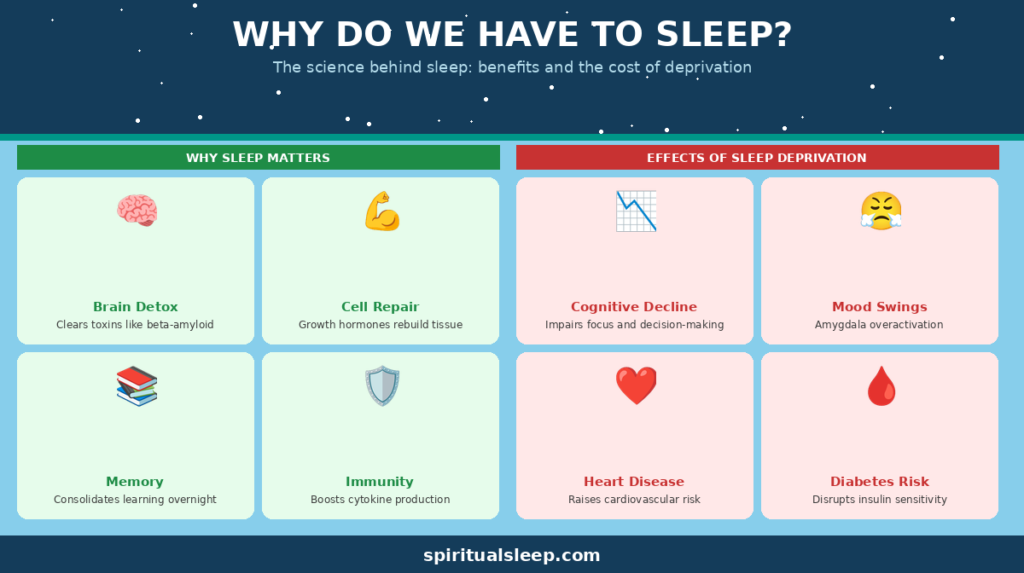
The brain clears toxins accumulated throughout the day during sleep. The glymphatic system, a waste-clearance pathway, becomes more active during deep sleep, flushing out harmful byproducts like beta-amyloid linked to Alzheimer’s disease.
While asleep, your brain consolidates memories, enhances learning, and strengthens neural connections. Studies show that people who sleep after learning new information retain it better than those who stay awake.
This memory consolidation process is also what drives the vivid dreams we experience during REM sleep.
Physical Restoration and Growth
Sleep triggers the release of growth hormones vital for cell repair and muscle growth. This is especially important for athletes and people recovering from illness or injury. I often recommend 7 to 9 hours of sleep to patients recovering from surgery for faster healing.
Sleep also enhances the immune response by promoting the production of cytokines, proteins that fight infection and inflammation. Lack of sleep hinders the production of these protective substances, making you significantly more susceptible to illness.
What Happens When We Do Not Sleep?
Short-Term Effects of Sleep Deprivation
Even missing a single night of sleep impairs cognitive function significantly. Research shows 24 hours of sleep deprivation produces cognitive impairment equivalent to a blood alcohol level of 0.10%. This affects your ability to complete daily tasks and handle complex problems.
Lack of sleep amplifies activity in the amygdala, the brain region responsible for processing emotions. This leads to heightened reactivity, irritability, and difficulty managing stress. I see increased anxiety and depressive symptoms regularly in patients after consecutive nights of poor sleep.
Sleep deprivation also reduces reaction time and motor coordination, significantly raising accident risk. Drowsy driving is responsible for an estimated 100,000 car accidents annually in the United States alone.
Even one night of inadequate sleep weakens your immune response. Individuals sleeping less than six hours per night were four times more likely to develop a cold after rhinovirus exposure than those who slept over seven hours.
Long-Term Effects of Sleep Deprivation
Long-term sleep deprivation is associated with several serious chronic health conditions:
- Heart disease:Poor sleep elevates blood pressure and inflammation, increasing cardiovascular disease risk significantly.
- Diabetes:Sleep disruption negatively affects insulin sensitivity, contributing to higher rates of type 2 diabetes.
- Obesity:Sleep deprivation alters hunger hormones, increasing ghrelin and decreasing leptin, which leads to overeating and weight gain.
Insufficient sleep is also closely linked to neurodegeneration. Chronic sleep deprivation leads to accumulation of toxic proteins like beta-amyloid associated with Alzheimer’s disease. Chronic sleep loss also doubles the risk of stroke, even in individuals without predisposing factors.
Prolonged sleep deprivation disrupts serotonin and dopamine levels, increasing vulnerability to depression. It worsens generalized anxiety disorder and panic attacks. In extreme cases, severe sleep deprivation can induce hallucinations and symptoms resembling psychosis.
Chronic sleep deprivation often develops into a diagnosable condition with specific treatment requirements.
Physical Consequences of Insufficient Sleep
Inadequate sleep disrupts the endocrine system in specific ways. Chronic sleep loss raises cortisol levels, increasing stress and promoting fat storage. Men sleeping fewer than five hours per night also experience significant drops in testosterone, affecting muscle mass and energy levels.
Lack of sleep also lowers pain tolerance and slows healing. Patients recovering from surgery or injury consistently require adequate sleep for tissue repair and optimal immune function.
Impact on Daily Life and Productivity
Sleep deprivation significantly reduces work performance by impairing concentration, decision-making, and problem-solving. It also increases irritability and reduces motivation, making sustained professional performance difficult.
Sleep-deprived individuals are more prone to conflict and communication breakdowns in both personal and professional relationships. Emotional regulation is impaired, reducing empathy and patience in ways that damage important connections.
How Much Sleep Do We Need?
Sleep Recommendations by Age
- Newborns (0-3 months):14-17 hours
- Toddlers (1-2 years):11-14 hours
- Adults (18-64 years):7-9 hours
- Older Adults (65+ years):7-8 hours
These are general guidelines. Individual needs vary based on genetics, activity level, and health status.
Personalizing Your Sleep Needs
Listen to your body. If you wake up tired despite spending enough time in bed, your sleep quality may be compromised rather than the duration itself. In my practice, I guide patients to track their sleep using wearable technology or sleep journals to identify the real problem.
The Science Behind Sleep Cycles
Sleep occurs in 90-minute cycles that repeat four to six times per night. Each cycle moves through four distinct stages, each serving a specific biological function.
- NREM Stage 1 (Light Sleep):Transition phase between wakefulness and sleep.
- NREM Stage 2:Heart rate slows and body temperature drops.
- NREM Stage 3 (Deep Sleep):Physical restoration occurs.
- REM Sleep:Dreams arise and the brain processes emotions and memories.
Missing any stage consistently produces specific deficits in physical or cognitive performance. Deep sleep deprivation impairs physical recovery. REM deprivation impairs emotional regulation and memory.
Tips to Improve Sleep Quality
- Stick to a consistent sleep schedule:Going to bed and waking at the same time every day reinforces your circadian rhythm. I follow this even on weekends to maintain steady energy levels.
- Cool, dark room:The optimal temperature is around 65F (18C). Use blackout curtains and minimize noise.
- Limit blue light:Reduce screen time at least one hour before bed.
- Mind your diet:Avoid heavy meals, caffeine, and alcohol close to bedtime.
- Regular exercise:Morning exercise in particular promotes deeper sleep at night.
- Napping strategically during the day can partially offset the effects of insufficient nighttime sleep.
A Doctor’s Personal Experience
In medical school, I often sacrificed sleep for study sessions, believing it was a necessary trade-off. The results were consistently poor. My performance suffered more after sleepless nights than it would have if I had slept and studied less. That personal experience changed how I approach sleep permanently.
I now prioritize 7 to 8 hours consistently and recommend the same to every patient. The patients who take sleep seriously are, without exception, the ones who recover faster, think more clearly, and manage stress more effectively. Sleep is not a luxury. It is the foundation on which every other health intervention works.
Medical Disclaimer:This article is based on thorough research, scientific studies, and my personal experience as a medical doctor interested in sleep and psychology. This content is for informational purposes only and should not be considered medical advice. Each individual’s sleep needs and health conditions are unique. I recommend consulting with a healthcare professional or sleep specialist to address specific concerns for better sleep.
Conclusion
Why do we have to sleep comes down to a simple biological truth: the body and brain cannot perform their most critical maintenance functions while awake. From clearing brain toxins to consolidating memories, regulating hormones, rebuilding tissue, and processing emotions, sleep is where recovery happens.
Seven to nine hours for adults is not a recommendation to strive toward. It is a biological requirement the body enforces regardless of what you believe about needing less. The short-term consequences of poor sleep are visible within a single night. The long-term consequences accumulate quietly over months and years.
Treat sleep with the same priority you give nutrition and exercise. Your long-term health depends on it.
References
- Xie et al., 2013. Science. Sleep Drives Metabolite Clearance from the Adult Brain.
- Rasch and Born, 2013. Physiological Reviews. About Sleep’s Role in Memory.
- Williamson and Feyer, 2000. Occupational and Environmental Medicine. Moderate Sleep Deprivation Produces Impairments in Cognitive and Motor Performance.
- PNAS, 2018. Beta-Amyloid Accumulation in Sleep-Deprived Adults.
- The Lancet, 2020. Sleep and Cardiovascular Health.
- Yaggi et al., 2006. Stroke. Sleep Duration and Risk of Stroke.
- Knutson, 2007. Diabetes Care. Associations Between Sleep and Insulin Sensitivity.
- Taheri et al., 2004. PLOS Medicine. Short Sleep Duration and Obesity Risk
- Cohen et al., 2009. Archives of Internal Medicine. Sleep Habits and Susceptibility to the Common Cold.